If you’ve just received a Virginia eminent domain offer letter, you’re probably feeling overwhelmed, maybe even a little lost. You might be asking: What does this really mean for me? What are my rights? Can I negotiate, or am I out of options? This guide will walk you through the entire offer letter process in Virginia, step by step, so you know exactly what happens next and how to protect your interests.
What Is a Virginia Eminent Domain Offer Letter?
A Virginia eminent domain offer letter is the official document the government or another authorized entity sends you when they want to buy your property for a public project. This could be for anything from building a new highway to expanding a school. The letter outlines the amount they’re offering for your property, explains why they need it, and often includes a deadline for your response.
Getting this letter doesn’t mean you have to accept the offer right away. It’s the start of a legal process, and you have rights every step of the way.
Why You Received an Offer Letter: The Eminent Domain Process in Virginia
Eminent domain is the legal power that lets the government take private property for public use, as long as they pay you what the law considers “just compensation.” In Virginia, this process usually unfolds in several stages.
First, you’ll get a notice of intent explaining that the government or a public agency wants to use your land for a specific project. Next comes the Virginia eminent domain offer letter. This is their formal proposal to purchase your property. They must base their offer on a fair market appraisal, and the letter should include that appraisal or explain how they calculated the amount.
If you accept, the sale moves forward. If you don’t, you can negotiate or challenge the offer. You’re not alone in this, and you have time to consider your options.
What’s Inside the Offer Letter? Key Elements Explained
When you open the envelope, you’ll find more than just a number. A typical Virginia eminent domain offer letter contains:
- An explanation of the public project and why your property is needed
- The amount offered as compensation
- A summary or copy of the appraisal report
- A deadline for your response
- Information on your rights, including your right to hire an attorney or get your own appraisal
Let’s say the state wants to widen a road, and your business is in the way. The letter should spell out exactly how much land they want, how they valued it, and why the project is happening. If anything is unclear, don’t hesitate to ask for more information. This is your property, and you deserve straight answers.
Your Rights After Receiving an Offer Letter
Getting a Virginia eminent domain offer letter triggers legal rights that protect you as a property owner. Here are some of the key protections you have:
- The right to fair compensation. The government can’t just pick a number out of thin air. They must offer what your property is worth on the open market.
- The right to your own appraisal. If you think their offer is low, you can hire an independent appraiser to value your property. Sometimes, this can reveal a big difference.
- The right to negotiate. You’re not required to say yes or no right away. You can counter their offer or ask for more information about how they calculated it.
- The right to legal advice. You can talk to an attorney who specializes in eminent domain. In some cases, the government might even have to pay your legal fees if you end up in court and win more than they offered.
- The right to challenge the taking. If you believe the project isn’t truly for public use, or the process wasn’t followed properly, you can challenge the action in court.
It’s important to remember that these rights are protected by Virginia law. If you’re unsure about any part of the process, reaching out for guidance can make a big difference.
How to Respond to a Virginia Eminent Domain Offer Letter
So, what should you do when you get an offer letter? Here’s a simple approach to help you navigate each step.
- Read the entire letter carefully. Don’t rush. Make notes about anything that’s unclear or seems incorrect.
- Review the appraisal. Check the details, does it accurately reflect your property’s condition, features, and location? If something’s off, you may have grounds to dispute the offer.
- Get a second opinion. Consider hiring your own appraiser. An independent appraisal can help you understand if the offer is fair.
- Talk to a legal expert. Eminent domain law can get complicated fast. An attorney who knows Virginia property law can explain your options and help you decide the best course of action.
- Respond by the deadline. If you decide to negotiate or reject the offer, do it in writing and keep a copy for your records.
Let’s imagine you own a family farm, and the county wants to take a strip of your land for a new utility line. Their offer seems low, and the appraisal doesn’t mention recent upgrades to your barn. By following these steps, you can push back with solid evidence and potentially increase your compensation.
Negotiation and Next Steps: What Happens If You Don’t Accept?
Not every property owner agrees with the first offer. In Virginia, you have the right to negotiate for a higher amount. Start by making a counteroffer, backed by your independent appraisal or any evidence you have that shows your property is worth more. Sometimes, just showing you’re prepared and informed can move the needle.
If you and the government can’t agree, the next step may be a formal condemnation proceeding in court. This sounds intimidating, but it’s how a judge decides what’s fair if both sides can’t settle on their own. The court will review both appraisals and any other evidence before making a final ruling on compensation.
It’s also possible to challenge the government’s right to take your property at all. Maybe the project isn’t truly for public use, or the process wasn’t followed correctly. This is rare, but it can happen. Legal support is crucial at this stage.
Remember: You don’t have to go through any of this alone. Many property owners find that having expert help makes the process less stressful and can lead to better outcomes.
Common Questions About the Virginia Eminent Domain Offer Letter Process
You might still have some questions. Let’s tackle a few of the most common ones:
How long do I have to respond to the offer letter?
The letter should give you a deadline, often 30 days. Don’t ignore it. If you need more time, ask for an extension in writing.
Can I still live or work on my property while we negotiate?
Yes, in most cases you can stay until a settlement is reached or the court makes a final decision. The government can’t force you to leave just because they sent an offer letter.
Will I get compensated for moving costs or business losses?
Depending on your situation, you might be eligible for extra compensation. This can include help with moving expenses, loss of business income, or relocation support. Make sure to ask about all your options.
What if I disagree with the appraisal?
You have the right to your own appraisal and to challenge the government’s valuation in negotiations or in court. Don’t be afraid to speak up if you think their number is too low.
[Inline Image Placeholder]
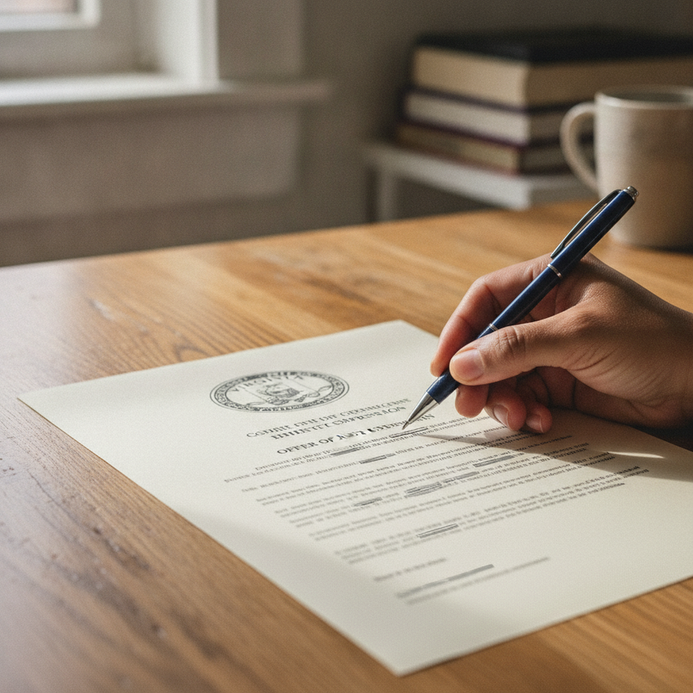
alt text: Detailed close-up of a Virginia eminent domain offer letter on a table, with a hand holding a pen, ready to make notes.
AI image prompt: A close-up of an official Virginia eminent domain offer letter placed on a wooden table. A hand holds a pen, poised to take notes. The scene feels personal and focused, with clear, readable text and a Virginia seal visible. Realistic, soft lighting.
Final Tips for Navigating the Process
Dealing with a Virginia eminent domain offer letter can be stressful, but knowledge is your best defense. Take your time, do your homework, and don’t be afraid to ask for help. Remember, this is your property, and you have the right to fair treatment and compensation.
If you want trusted guidance through the process, or just need answers to your questions, contact us to learn more.